Rooted Interests with
Frank Byrne, MD
Frank Byrne, MD
Rooted Interests with
Frank Byrne, MD
Frank Byrne, MD
Leadership and Community Building in Healthcare
This is part two of a two-part interview with Dr. Frank Byrne. Part one can be read here.
Onward Academic Partners recently had the opportunity to speak with Frank Byrne, MD, President-Emeritus of St. Mary’s Hospital in Madison, Wisconsin.
Our conversation explored leadership and the vital role community plays in shaping healthcare. Dr. Byrne emphasized that strong leadership is less about having all the answers and more about building trust, listening with empathy and working toward shared goals. Just as important, he highlighted how community engagement drives growth, whether through career development opportunities, collaborative teaching environments or initiatives that are targeted at improving patient experience. When organizations engage with the people they serve, the result is not only stronger institutions, but healthier communities.
With that perspective in mind, we asked Dr. Byrne to reflect on his leadership journey, the influence of community engagement and the lessons he carries forward.
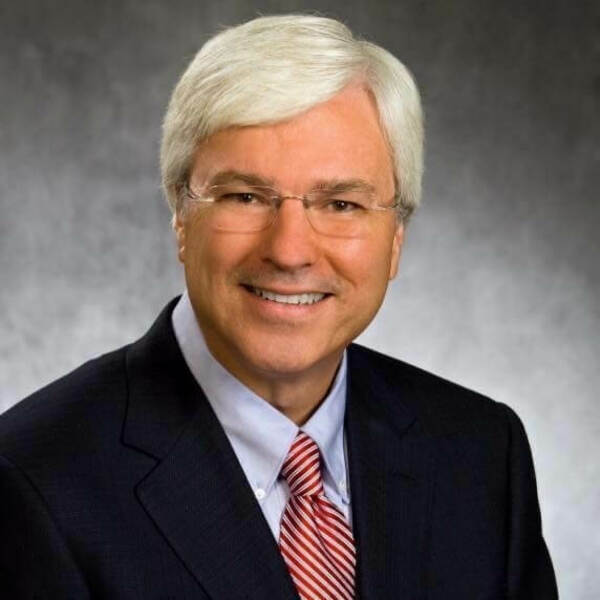
Dr. Frank Byrne
What strategies have you incorporated to address resident burnout?
Staffing shortages, especially for specialty staff, contribute to burnout. Since the passage of the Affordable Care Act, access has improved. Unfortunately, the trend is in the other direction right now, which is deeply concerning. We must continue working to ensure access to care for everyone.
The first step is to acknowledge the problem. We have a culture in medicine where expressing concern about your own needs is seen as a sign of weakness. It’s actually a sign of strength. Med school can be a very ugly, competitive environment. We need to break that cycle and culture, and lead by example. Leadership can exemplify that they aren’t just interested in what you can do for your job, but they’re interested in you as a person. People respect leaders who are willing to admit their vulnerability. None of us has the answer key, and nobody accomplishes anything alone. People with different skills and backgrounds must work together. Have humility when things are working, and balance when they’re not. We see many corporations corkscrew into the ground because they are unwilling to change. Here’s what I know for sure: Preserving the status quo and having that as your focus is a prescription for failure. Things are always changing. Be interested in creating a future rather than passively accepting a future that was foisted upon you by somebody else.
What advice would you give to someone considering starting a new residency program today?
Two words: do it. It’s hard, there are a lot of regulatory requirements, it requires commitment, and you need good faculty. Medical students need a great education so they can make the world better. Community benefit is what a not-for-profit health system should be doing. Go where the need is. Life is a Venn diagram: What are your passions? What are your skills? Where is the need? If you focus on where those three circles overlap, you will have an incredibly meaningful and fulfilling life.
What’s been your experience in integrating public health priorities with the hospital’s mission or service delivery?
For-profit hospitals and health systems are required, justifiably, to do a Community Health Needs Assessment. In Fort Wayne, we collaborated with the hospital systems in a very robust way, then we distributed the data openly so other not-for-profits could benefit from the assessment. Always look for new opportunities. For example, while I was leading Parkview Hospital, a group. nurses in Ft. Wayne, led by Michelle Ditton RN, approached me about starting a Sexual Assault Treatment Center to better support victims of domestic and sexual assault in our community. They asked for an improved space for patients to increase privacy and respect their dignity, and requested an expensive examination microscope to confirm and provide criminal evidence for survivors. They wanted police officers trained to be sensitive to victims, and agreed to all get certified as Sexual Assault Nurse Examiners to provide better patient care. The YWCA Fort Wayne is nationally recognized for their approach to preventing and intervening in domestic violence. I asked to see if we could duplicate what they are doing. You’ve got to think at the high level: What is the public health need? Then, at the ground level, what can you do about it?
“Community benefit is what a not-for-profit health system should be doing. Go where the need is. Life is a venn diagram: What are your passions? What are your skills? Where is the need? If you focus on where those three circles overlap you will have an incredibly meaningful and fulfilling life.”
What role should healthcare play in addressing social determinants of health?
About 10 years ago you started hearing people talk about the social determinants of health. I couldn’t figure out whether I was mad because it took them so long, or glad that they finally woke up about it. Eating a healthy diet is very hard for someone living in a food desert. Which deforestation issues? In Haiti, tell somebody not to cut down those trees that you need to cook your food and heat your house. At least you can survive today. You need to help them find a solution that considers the social determinants of health and the systems that perpetuate problems. ProMedica in Toledo, Ohio moved their corporate office to a blighted part of town, redeveloped the area and started a grocery store themselves when no grocers would agree to open there.
The impact of housing insecurity on kids is huge. If you want to change the cycle of a family’s life, provide access to quality education. Your health status is directly linked to your education level and socioeconomic status. How does a kid learn if they have housing or food insecurity? Funding literacy and other social programs can help alleviate some of these disparities.
What collaborations do you see as necessary to make a difference in people’s health overall? What are areas of improvement in the U.S.?
There is a constant theme here. Nobody knows everything, and no single organization accomplishes everything. Success requires relationships, building community, and being aware of needs and resources. If someone cannot afford their prescription, you might find them a pharmaceutical assistance or free sample program. Generic prescribing significantly reduces costs for patients. You need to have partnerships with the people who work to keep people healthy and out of the hospital so beds are available for people who need them. Don’t expect people to fit your mold or ideal. We know that if you teach diabetics how to control their blood sugars, they have less blindness, less kidney failure, and less amputations– all very good things to avoid. We partnered with our competitor to provide community-wide diabetes education and primary care. In terms of community good, we shared that responsibility. It’s about the quality of life, and frankly, it’s also about the money. Those issues drastically alter quality of life and their ability to be productive and support themselves and their families. How can we improve the life cycle of families in the community? The Dane County Health Council is a wonderful resource. Providing behavioral health in public schools is huge. The number one public health need in many under-resourced communities is dental care. Sometimes, it takes a village. We used to only dream about the type of data sharing now available in public health. Collaboration across public and private sectors will help us break the cycle of illness and improve the lives of families for generations to come.
Rooted Insights is an engaging interview series that brings you candid conversations with some of the most dynamic leaders in academic medical administration. Over the years, I’ve had the privilege of learning from and collaborating with these remarkable individuals, and now, we’re sharing their insights and experiences directly with you.
Each interview offers a concise yet impactful perspective on timely and relevant issues in their area of expertise across academic medicine. Whether seeking new ideas, professional inspiration, or development guidance, these conversations are designed to spark your curiosity.
If you’d like to dive deeper, please contact me directly and we can continue the conversation.
Sit back and enjoy this series!