
Designing a Simulation Program Business Plan: Fresh Eyes and a New Mindset for Change
Designing a Simulation Program Business Plan Fresh Eyes and a New Mindset for Change
Background
When the medical school was built, it dedicated significant space to a state-of-the-art simulation center. The simulation center became central to the undergraduate medical education curriculum, supported several graduate medical education programs and served as a prominent feature for visitors touring the medical school.
Key Challenges
Over time, center utilization declined to just over 50%, while annual operating losses grew to more than $1 million. The decline reflected increased competition, scheduling barriers, limited marketing capacity and unclear financial accountability.
- Increased Regional Competition: Local and regional competitors opened new simulation centers, including one operated by a hospital partner.
- Scheduling Barriers: Although the center offered stronger training capabilities than many competitors, scheduling logistics limited access for users beyond undergraduate medical education (UME).
- Outdated Marketing & Web Presence: Limited marketing resources reduced the center’s ability to promote itself, including a website that had become objectively dated compared to other leading data centers nationwide,
- Unclear Financial Expectations: Leaders had been directed to prioritize medical student education without clear financial guidelines, creating a disconnect between the center’s mission and the medical school’s broader budgeting priorities.
The center needed an operations plan to significantly reduce its annual operating loss without diminishing its value to medical students.
Process Used
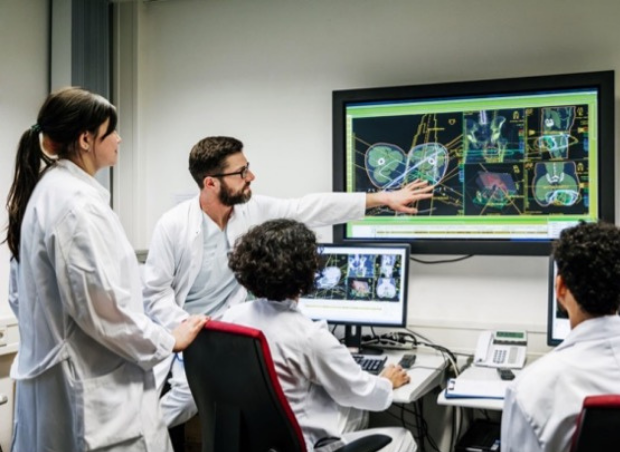
Onward led a multidisciplinary team in developing a business plan for implementation in the next fiscal year. Simulation center deans and administrative leaders participated actively throughout the process.
Onward facilitated a comprehensive SWOT analysis that incorporated input from center users, researched other simulation centers, reviewed internal utilization data across UME, GME and other user groups and completed an independent website assessment. These efforts built support for change and shaped a practical, actionable business plan.
Issues Addressed
The simulation center’s core educational mission for medical students remained the top priority, with no compelling reason to alter that focus. At the same time, significant opportunities existed to increase engagement with hospital partners, residency programs and the broader community and margin variances.
Some GME program leaders wanted to utilize the center for resident training but lacked clear onboarding guidance. Internally, center leaders needed to transition to data-driven operations, clarify priorities and track progress quarterly. Additionally, expanding training beyond the center’s physical footprint, such as delivering simulation directly on hospital nursing floors, helped reframe the effort from managing a location-based facility to building a true simulation program.
Success Metrics (KPIs)
Leadership instituted key performance indicators to track progress continuously using readily available data, reviewing metrics monthly to allow for ongoing adjustments:
- Space Utilization Rate: Target = 70% of time simulation center space is occupied with events. (This percentage would include time spent in-situ, e.g., partner nursing units.)
- Staff Cost Percentage: Target = <65% of total operating expenses.
- GME Usage by Department: Target = >4 Departments with at least 10% of total GME hours by the start of FY29.
- Total Events, Learner Hours & Revenue: Target = Increase GME and Hospital Partner program revenue by 10% in the next fiscal year.
- Cost Efficiency Tracking: No target. Monitor total expense per event across UME, GME, Hospital Partners and third-party users to raise awareness of cost and margin variances.
Key Takeaways
To achieve these benchmarks, Onward partnered with simulation leadership to execute the following strategy:
- Establish an Advisory Board: Convene simulation champions across the medical school, partner hospitals and university (including physician and nursing leaders) to advocate for the program.
- Rebrand as a Simulation Program: Shift focus from a fixed facility to a mobile program that can deliver on-site staff training (e.g., in hospital nursing units) using portable equipment.
- Refine Operations & Leadership Focus: Develop an annual operations plan with quarterly priorities and clear responsibilities; this includes allocating 50% of the Administrative Director’s time strictly to internal and hospital business development.
- Optimize Scheduling & Access: Implement scheduling technology to make booking easier for potential clients and require UME leaders to confirm course needs at the start of each academic year.
- Enhance Marketing & Funding: Secure funding for updated marketing resources and website enhancements, while partnering with the Development team to pursue a naming rights initiative for the center.
Together, these actions provided a practical roadmap to reduce the center’s operating loss while preserving its core educational role and expanding its value to clinical partners.